X-ray Photoelectron Spectroscopy, or XPS, is a highly surface-sensitive technique used to study the elemental composition and chemical states of a material surface.
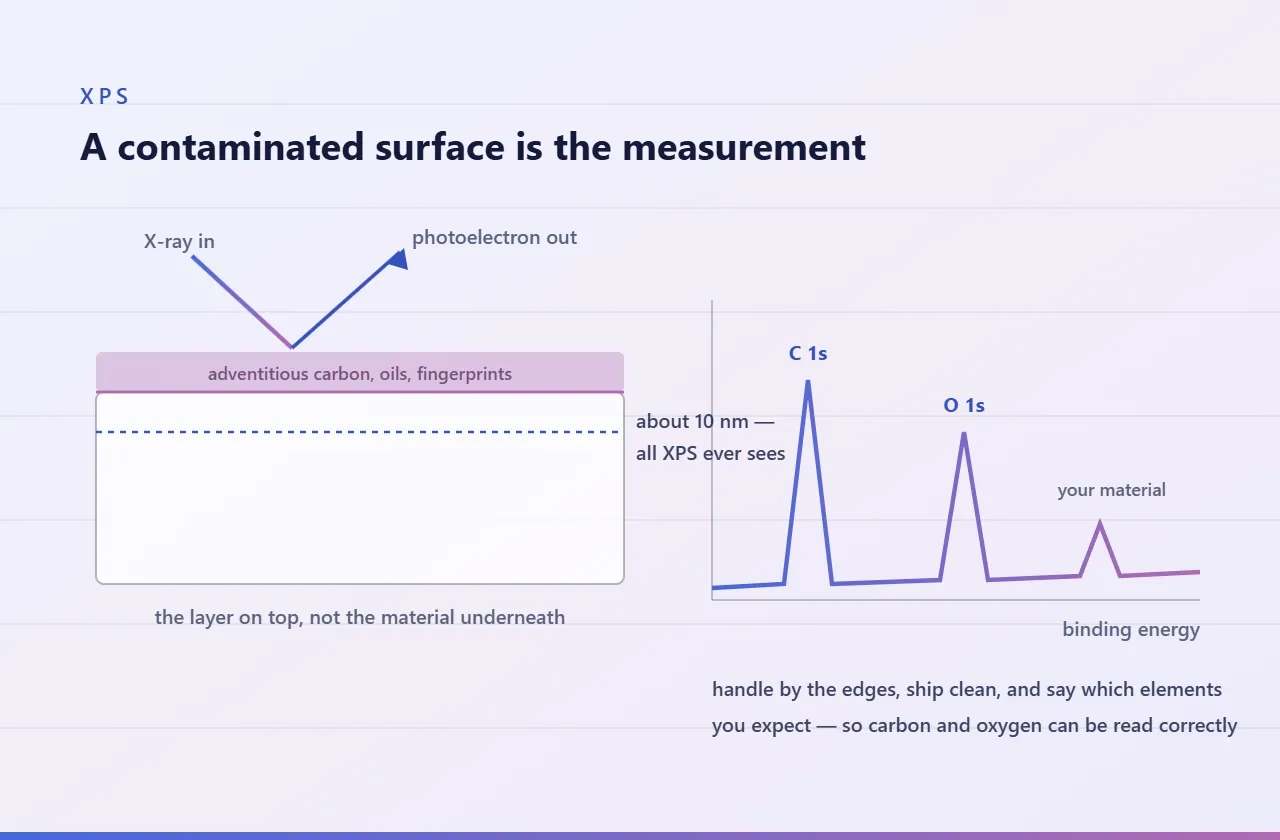
Unlike many bulk characterization techniques, XPS mainly analyzes only the outermost few nanometers of the sample surface. This means the result represents the surface chemistry of the material, not the complete bulk composition.
Because of this, sample surface cleanliness becomes extremely important before XPS analysis.
Why Surface Cleanliness Matters in XPS
Since XPS detects information from only the top surface layer, even a very small amount of contamination can affect the result.
Contamination may come from:
dust particles
finger touch or oil marks
moisture adsorption
tape or glue residue
storage conditions
natural surface oxidation
exposure to air before analysis
These surface contaminants can introduce additional peaks in the XPS spectrum.
For example, carbon and oxygen peaks are commonly observed in XPS. Sometimes these elements are part of the actual sample, but sometimes they may come from adsorbed carbon, surface contamination, moisture, or oxidation due to air exposure.
So, if the sample surface is not clean, the XPS result may not represent the actual surface chemistry of the material.
Why Proper Sample Handling is Important
Proper sample handling is one of the most important steps before XPS analysis.
Researchers should avoid touching the sample surface directly. Clean tweezers should be used for handling, and the sample should be stored properly before analysis.
It is also helpful to share the sample history with the testing team, such as:
how the sample was prepared
whether it was exposed to air
whether any solvent, tape, or binder was used
whether oxidation is expected
whether surface treatment or coating was done
This information helps the analyst interpret the XPS spectrum more accurately.
Why Expected Elements Should be Shared Before XPS
Another important point in XPS analysis is sharing the expected elements before testing.
In XPS, the first step is usually a survey scan. This scan helps identify which elements are present on the surface.
After that, high-resolution scans are taken for selected elements to study their:
chemical state
oxidation state
bonding environment
surface composition
When the expected elements are known, the analyst can check the relevant binding energy regions more carefully.
This is especially useful when:
peaks are weak
elements are present in low amounts
peaks overlap with nearby elements
surface contamination is present
oxidation or residue may affect interpretation
Sharing expected elements does not mean the result is adjusted according to expectation.
It simply helps the lab compare the detected peaks with the expected composition and understand whether the observed signals are from the actual material, surface contamination, oxidation, residue, or unexpected impurities.
Example: Carbon and Oxygen Peaks in XPS
Carbon and oxygen are commonly seen in XPS results.
But their presence should be interpreted carefully.
Carbon may come from the actual material, but it may also come from atmospheric carbon contamination, handling, or organic residue.
Oxygen may be part of the sample structure, but it may also come from surface oxidation, adsorbed moisture, or exposure to air.
That is why sample history and expected elements are important for correct interpretation.
Final Takeaway
In XPS, the quality of the result depends not only on the instrument but also on the condition of the sample surface.
A clean sample surface helps generate more reliable information about:
elemental composition
chemical states
oxidation states
bonding environment
surface chemistry
Before XPS analysis, researchers should handle samples carefully, avoid surface contamination, store samples properly, and share expected elements with the testing team.
At RNDgrid, we ask for expected elements before XPS analysis so the lab can review the spectrum properly and provide more meaningful surface chemistry interpretation.
In short:
In XPS, a clean surface and clear expected element details help generate more reliable surface chemistry data.